
How to Keep Donors Connected in the Final Weeks of the Year
Practical year-end fundraising strategies: set targets, segment donors, personalize multichannel outreach, tell impact stories, and thank supporters promptly.


December is the most critical month for nonprofit fundraising. Nearly one-third of annual donations happen during this time, with the last three days of the year being especially impactful. Here's how to make the most of it:
- Set clear goals: Use past data to define specific targets, like increasing repeat donations or acquiring new supporters.
- Segment donors: Tailor outreach for active, lapsed, first-time, and major donors to maximize engagement.
- Leverage donor data: Analyze giving patterns, average gift sizes, and engagement history to create personalized strategies.
- Tell real stories: Share specific examples of how donations make a difference, using clear language and emotional narratives.
- Use multichannel outreach: Combine email, social media, and text messages for consistent, timely communication.
- Thank donors promptly: Send personalized thank-yous and follow up with impact reports to show how their contributions help.
From Giving Tuesday to Donor Retention: Year-End Success Tips
Set Clear Year-End Goals
Without specific targets, your year-end fundraising efforts can lose focus and fall short of their potential. Clear goals provide direction, help you measure progress, and ensure your team is aligned and working toward shared outcomes. To set realistic benchmarks, start by looking at past performance.
Analyze last December's campaigns to identify what worked well and how donors responded. Use that data to set achievable, incremental goals that build on previous success.
Make sure your goals align with your organization's overarching mission and priorities. For instance, if your mission focuses on expanding educational opportunities, your year-end campaign should highlight how donor contributions directly support that cause. This clarity helps donors see the tangible impact of their gifts. Once your goals are defined, break them down by donor segments to create targeted outreach strategies.
Establish Specific Financial Targets
Define clear financial targets with deadlines to keep your team on track. Start by setting an overall fundraising goal for the year-end, then break it into smaller, manageable milestones. These checkpoints allow you to monitor progress and adjust your approach as needed.
Include specific metrics, such as total revenue, new sponsor acquisition, and converting one-time donors into recurring supporters. These indicators provide valuable insights into the health and sustainability of your fundraising program.
For example, recurring donors have an average lifetime value of $7,604.17, compared to $3,620.67 for one-time donors. Use these figures to set conversion goals based on your historical donor data.
To stay focused, make your goals SMART: Specific, Measurable, Achievable, Relevant, and Time-bound. Instead of aiming for a general goal like improving donor retention by 15% in December, set a more precise target, such as increasing repeat giving by a specific percentage within a defined timeframe.
Match Goals to Donor Segments
Donors aren’t all the same, so your goals shouldn’t be either. Tailor your objectives to different segments of your donor base for more effective outreach.
- Active supporters: Encourage deeper engagement by inviting them to make additional contributions or explore expanded sponsorship options.
- Lapsed donors: Reconnect with those who haven’t contributed recently through personalized outreach. Retention among new donors is often low, so re-engaging past supporters can be a valuable strategy.
- First-time donors: Focus on securing their initial gift while laying the groundwork for a long-term relationship. Follow up promptly, and share updates on how their support is making a difference to encourage recurring contributions.
- Major donors: Develop a personalized approach for high-potential supporters, such as direct meetings or tailored proposals, to strengthen their commitment.
Engage your board members in setting and tracking these segmented goals. When board members understand and commit to these objectives, they can play a more active and effective role in fundraising.
Keep track of your segmented goals using a simple, regularly updated sheet throughout December. This real-time tracking helps your team identify which strategies are working and where adjustments are needed, ensuring everyone stays focused on achieving your year-end targets.
Use Donor Data for Better Segmentation
Your donor database is a goldmine of insights, capable of turning generic outreach into meaningful, personalized conversations. By using this data effectively, you can align your segmentation and communication strategies to meet your year-end financial goals. The key lies in identifying the right donor metrics to fine-tune your approach.
Start by analyzing donor histories. Look at giving patterns, communication preferences, and past engagement. This information helps you uncover your most loyal supporters, identify donors who may need re-engagement, and spot areas where you can grow. With this foundation, you can create outreach strategies that feel personal and impactful.
Segmentation isn’t just about dividing donors into broad categories. To truly connect, you need to combine multiple data points, building a complete picture of each donor’s relationship with your organization. This way, you avoid the pitfall of sending the same message to everyone - an approach that often results in low engagement and missed opportunities.
Group Donors by Behavior
Behavioral data offers deeper insights into donor intentions than demographics alone. Focus on three key metrics: giving frequency, average gift amount, and recent engagement with your communications.
- Giving frequency reveals a donor’s commitment level. Monthly or quarterly donors, for example, show different engagement patterns than those who give annually. By tracking contributions over the past year, you can tailor your messaging to reflect their consistency.
- Average gift amounts help you gauge a donor’s capacity and level of investment. Someone who consistently gives $500 annually will need a different approach than a donor who contributes $50. Reviewing their full giving history ensures you neither underestimate nor overestimate their potential.
- Recent engagement shows current interest. Metrics like email open rates, click-throughs, and social media activity help you time your appeals effectively. Donors who haven’t engaged in months may need a re-engagement strategy, while active participants are primed for timely asks.
For example, you might identify a group of donors who give $100 or more annually, contribute at least twice a year, and have opened at least three emails in the last two months. These engaged mid-level donors are excellent candidates for year-end appeals tied to specific projects or initiatives.
Timing is another critical factor. Some donors prefer giving in December, while others respond better to mid-year campaigns. Use your data to track these patterns and tailor your outreach schedule. For instance, a donor who has given every December for three years is likely to do so again - if you reach out at the right time.
Build Tailored Outreach Plans
Once you’ve segmented donors by behavior, focus on customizing your communication strategies to drive engagement.
- Active sponsors thrive on recognition and opportunities to deepen their involvement. These donors have given recently and regularly engage with your content. Share updates on program outcomes, invite them to participate in year-end matching campaigns, or offer exclusive sponsorship opportunities. Highlight the tangible impact of their support to strengthen their connection.
- Lapsed donors need a more thoughtful approach. These individuals haven’t contributed in over a year. Acknowledge the gap without making them feel guilty, and focus on what’s new since their last gift. Show how their past support made a difference, and make it easy for them to give again by suggesting a similar gift amount.
- Major donors require highly personalized attention. For those giving $1,000 or more annually, standard email campaigns won’t cut it. Instead, use phone calls, personal meetings, or customized proposals. Share detailed impact reports that demonstrate how their contributions are being used. As the year ends, engage them in conversations about their philanthropic goals and how your organization aligns with their values. These personal touches often lead to increased giving or long-term commitments.
Track the effectiveness of your strategies by monitoring response rates, average gift sizes, and conversion rates. For instance, if personalized phone calls to lapsed donors yield a 25% response rate compared to 5% for emails, consider adjusting your approach to include more direct interactions. Real-time feedback allows you to refine your efforts throughout December.
Be mindful of donor fatigue, especially during the busy holiday season when inboxes are overflowing. Space out your communications strategically. Active sponsors might appreciate updates every 7-10 days, while lapsed donors may only need 2-3 thoughtfully crafted messages during December. Focus on quality and relevance over sheer frequency.
Finally, choose the right communication channels for each segment. Younger donors might respond best to text messages or social media, while older supporters may prefer email or direct mail. Use your engagement data to identify the most effective channels for each group and prioritize those in your outreach plans.
Next, discover how to craft personalized messages that resonate, building on the tailored strategies outlined here.
Write Personalized Messages That Connect
Once you've segmented your outreach, the next step is to craft personalized messages that truly resonate. A thoughtful, personal touch can inspire action by showing donors that their contributions genuinely make a difference. People want to feel seen and valued, and your communication should reflect that.
Effective year-end messaging strikes a balance between emotional appeal and clarity. During this crowded season, donors are bombarded with requests from various organizations. To stand out, make your messages feel sincere, specific, and easy to understand. Avoid vague phrases like "make a difference" and instead show exactly what their support achieves.
The tone of your message is just as important as the content. Donors respond better to conversational, straightforward writing that respects their time. Avoid complicated jargon or overly formal language. Your goal is to sound like a real person who genuinely appreciates their generosity - and who knows the impact of their support.
One way to strengthen this connection is through storytelling. Let’s dive into how real, concrete stories can bridge the gap between data and human connection.
Tell Real Stories
Stories have a unique ability to create emotional bonds that numbers alone can’t achieve. When donors read about a specific individual or community they've helped, they feel part of something meaningful. That emotional connection often drives year-end giving more effectively than general appeals.
Focus on specific, relatable outcomes donors can visualize. Instead of saying, "Your donation helps children", try something like: "Your $50 gift provided school supplies for Maria, a 9-year-old in rural Guatemala. Thanks to you, she now has notebooks, pencils, and textbooks for the entire school year." This paints a vivid picture and helps donors see the direct impact of their contribution. They can imagine Maria in her classroom, using those supplies - a far more powerful image than a generic statement.
Use numbers to illustrate the scale of your work, but keep it digestible. For example, instead of overwhelming readers with too much data, say, "Last month, we provided 1,200 meals to families in need" or "47 children received winter coats and boots." These details give donors a clear sense of what their support accomplishes.
Structure your stories around a transformation. Start with a challenge, show how donor support made a difference, and end with a positive outcome. For example: "When we met James last spring, he was struggling to find stable housing after losing his job. Thanks to your support, he completed our job training program in August and started work as a certified electrician in October. By November, he moved into his own apartment and shared a photo of his first Thanksgiving dinner in his new home." This kind of narrative helps donors see the journey their contributions made possible.
Add sensory details to make your stories come alive. Instead of saying, "The community now has clean water", describe how "families no longer walk 3 miles each morning to collect water - they can now turn on a tap in the village center and fill their containers in minutes." These small but vivid details help donors connect with the reality of the people they’re helping, making the impact feel more immediate and personal.
Blend individual stories with broader impact. While personal narratives create emotional ties, donors also want to know their support contributes to larger change. For example, after sharing Maria’s story about school supplies, you could add: "Maria is one of 230 students in her school who now have the materials they need to succeed this year." This combination highlights both personal transformation and collective progress.
Finally, keep donors updated on people or projects they’ve supported in the past. If someone sponsored a child’s education last year, tell them how that child is doing now. For example: "Remember when you helped fund Sarah’s first year of high school? She just completed her sophomore year with a 3.8 GPA and joined the debate team." These follow-ups show that their contributions create lasting change, not just temporary fixes.
Use Plain Language and U.S. Conventions
Clear, simple communication ensures your message gets across without effort on the donor's part. During the busy year-end period, people skim emails and letters quickly. If they have to work to understand your message, they’ll likely move on.
Stick to plain U.S. English, written at about an eighth-grade reading level. Use short, active sentences and clear calls to action. For example, write dates in the month/day/year format (12/31/2025) and always place the dollar sign before amounts ($100).
Active voice is key to engaging writing. For instance, "Your donation will provide meals for 50 families" is more direct and compelling than "Meals for 50 families will be provided by your donation." Keep sentences short and focused to grab attention immediately.
Address donors directly with "you" and "your" to make the message feel personal. Saying "Your support makes this work possible" is far more engaging than "Donor support makes this work possible." It reminds readers they’re not just part of a group - they’re individuals making a real difference.
Test your messages by reading them aloud. If you find yourself stumbling over phrases or running out of breath before finishing a sentence, simplify your wording. Reading aloud also helps you spot awkward transitions or unclear sections that might confuse donors.
Every message should end with a clear, actionable request. Tell donors exactly what you want them to do, whether it’s "Donate $50 today", "Renew your monthly sponsorship", or "Share this story with your friends." Clear calls to action make it easier for donors to act on their generosity.
Use Digital and Multichannel Outreach
Connecting with donors across multiple channels increases the odds of reaching them during the busy year-end season. People check their messages at different times and on different platforms. Email is great for detailed updates and donation appeals. Social media provides quick bursts of engagement and easy sharing opportunities. Text messages work well for urgent reminders, like deadlines. When used together, these channels amplify your message and keep your organization on donors' minds.
Each platform has its own strengths, but consistency is key. The timing of your outreach is just as important as the content. The final weeks of December are packed with opportunities tied to tax deadlines, holiday traditions, and the general desire to end the year on a high note. A well-organized approach ensures you can make the most of these moments without scrambling at the last minute.
Here’s how a communication calendar and platform tools can help you stay on track.
Create a Communication Calendar
A communication calendar helps you organize your outreach and ensures you’re hitting donors at the right times. Plan your emails, social media posts, and text messages now through December 31, 2025. This avoids communication gaps and prevents overwhelming your audience with too many messages too close together.
Start by identifying key dates. December 31, 2025, is the biggest deadline - the last day for donors to make tax-deductible contributions for the 2025 tax year. Many people wait until the final days to donate, so schedule multiple reminders leading up to this date. For example, send messages on December 27, December 29, and December 31 to nudge last-minute givers.
Other important dates include Giving Tuesday on December 2, 2025, which kicks off the year-end giving season. Many organizations see a surge in donations on this day, so plan a coordinated campaign across all your channels. If your organization has its own year-end campaign deadline before December 31, make sure donors are aware well in advance.
For timing, consider sending emails on Tuesdays and Thursdays, posting on social media during peak hours (7–9 AM and 5–7 PM), and limiting text messages to two or three key reminders.
Keep your content fresh by tailoring it to each platform. For example, if you send an email sharing a story about a family your organization helped, post a photo of that family on Instagram with a shorter caption. On Facebook, share a quick video of your team preparing for year-end activities. A text message could simply say: "Only 3 days left to make your 2025 tax-deductible gift. Donate now: [link]." Each channel should complement the others without repeating the same exact message.
Be flexible with your schedule. If you’re 75% of the way to your goal by December 20, share that progress to inspire urgency. If a major donor offers a matching gift challenge in the final week, adjust your calendar to promote it across all platforms. Use your calendar as a guide, not a rigid plan.
Track what works. Monitor which emails have the highest open rates, which social media posts get the most engagement, and which text messages drive donations. This data will help you fine-tune your efforts in real time and improve your strategy for next year.
Use HelpYouSponsor Features
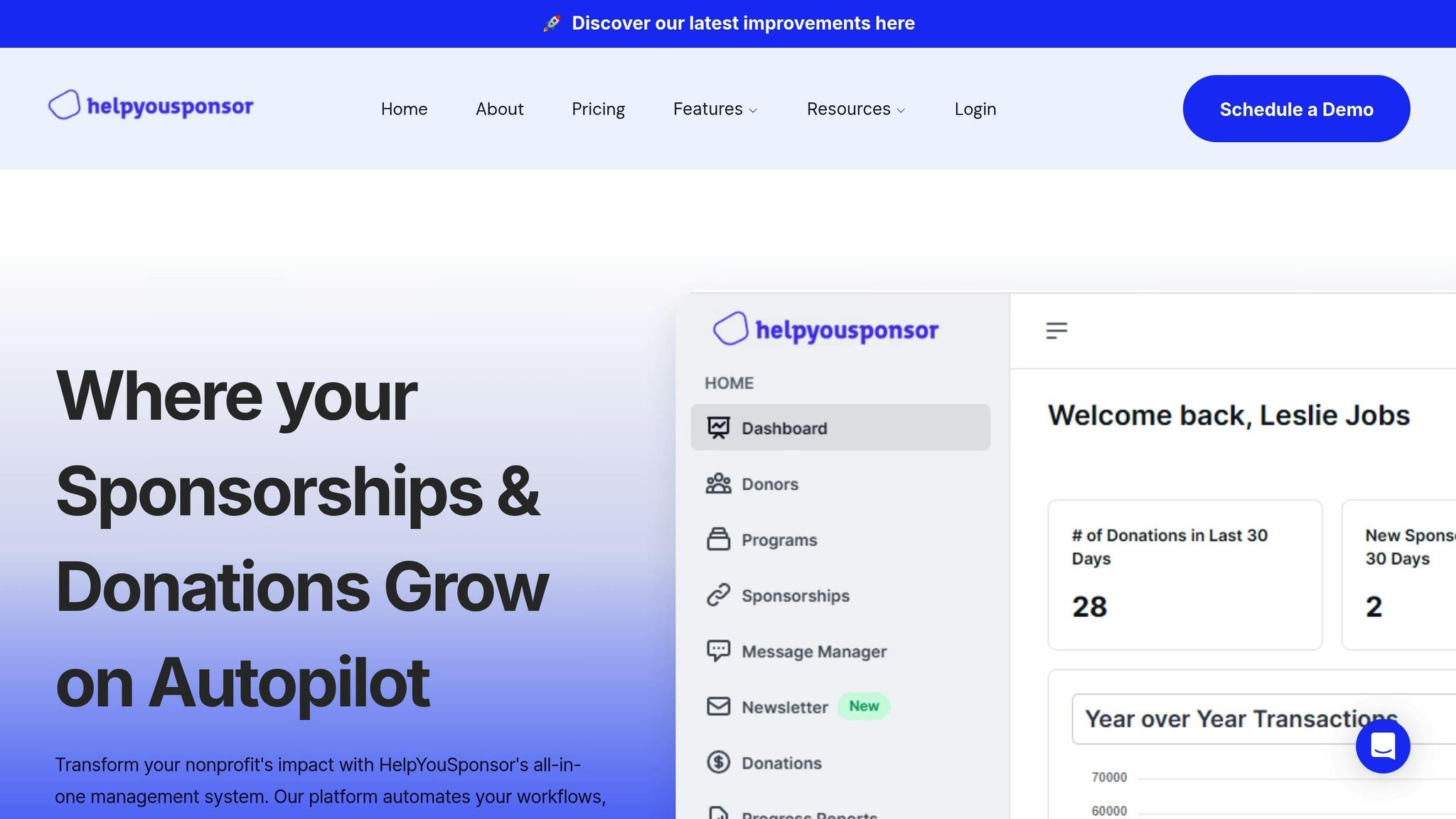
HelpYouSponsor makes multichannel outreach easier by centralizing donor data and automating repetitive tasks. With all your donor information in one place, you can coordinate communication across platforms without juggling spreadsheets or multiple tools.
Automated reminders are a lifesaver during the busiest time of the year. Set up thank-you messages to go out immediately after someone donates, so every donor feels appreciated - even when your team is stretched thin. Schedule reminder emails for monthly sponsors whose commitments are about to expire, ensuring steady revenue without constant follow-ups.
Centralized data also allows you to segment your audience and deliver targeted messages. For example, pull a list of donors who gave last December but haven’t donated this year, and send them a personalized re-engagement email. Or, highlight your most loyal monthly sponsors with a specific thank-you message acknowledging their ongoing support.
The platform’s integrated messaging system lets you communicate directly with donors and track which channels are driving the most success. For instance, you can see how much you’ve raised through email campaigns versus social media or text messages. Donors can also log into their accounts to see how their contributions are being used, which builds trust and encourages continued giving.
HelpYouSponsor’s seamless payment gateway integration simplifies the donation process. When you send an email or post on social media, include a direct link to your HelpYouSponsor donation page. A smooth, quick donation process increases the likelihood of follow-through.
Another handy feature is real-time goal tracking. Add a progress bar or donation thermometer to your website to show how close you are to reaching your year-end target. As donations roll in, the tracker updates automatically, creating a sense of momentum that motivates others to contribute. For example, if donors see you’re at $18,500 of a $25,000 goal, they’re more likely to give because they can visualize the impact of their gift.
For organizations on the Pro Plan ($50/month for up to 63 commitments per month) or Max Plan ($0.80 per commitment), these features scale as your donor base grows. Whether you’re managing a small campaign or a large one, HelpYouSponsor adapts to your needs without requiring a major system overhaul.
By automating administrative tasks, you free up time to focus on what matters most: building meaningful relationships with donors. Instead of manually sending receipts or updating spreadsheets, you can craft personalized messages, share inspiring stories, and respond thoughtfully to donor questions. This combination of efficient systems and personal connection creates a standout donor experience during the critical final weeks of the year.
Once your digital outreach is running smoothly, shift your energy toward thanking donors and showcasing the impact of their generosity.
Thank Donors and Show Their Impact
Gratitude is the cornerstone of building strong, lasting relationships with donors. When someone chooses to support your organization, they’re entrusting you with their resources and their belief in your mission. A genuine thank-you not only acknowledges this trust but also makes donors feel valued. Pairing that gratitude with clear examples of how their contributions are making a difference strengthens their connection to your cause.
As the year winds down, donations often increase, and your team may find itself juggling multiple responsibilities. Acknowledging donations promptly during this busy time helps reassure donors that their contributions matter. When you pair those acknowledgments with updates on the tangible results of their generosity, you create a foundation of trust and loyalty that can last well beyond the holiday season.
Here are some practical ways to thank donors and highlight the impact of their support.
Send Quick Thank-You Messages
Timing matters when it comes to expressing gratitude. A prompt thank-you shows donors that their contributions are noticed and appreciated. On the other hand, waiting too long can make your message feel impersonal or like an afterthought.
Automated thank-you emails can be a lifesaver during busy periods like year-end giving. For example, setting up an automated email through your HelpYouSponsor page ensures every donor receives acknowledgment right away. These messages don’t need to be long - just heartfelt. A simple note like, "Thank you for your generous donation! Your gift is helping provide meals for families in need", can go a long way.
Personalization makes these messages even more meaningful. Address donors by name and reference the specific impact of their gift. For instance, you might write: "Hi Sarah, thank you for your generous donation to our holiday food drive. Your support is helping us provide meals to families in need this season." This small touch shows that you recognize their individual contribution.
For added immediacy, consider sending a quick, personal text message with a link to a real-time update on your programs.
Don’t forget about your monthly donors. Their ongoing support is just as critical as one-time gifts. A special message acknowledging their consistent generosity - such as, "Your monthly contributions are the backbone of our programs. Thank you for your steadfast support" - can make them feel appreciated and valued.
Lastly, always include a tax receipt with your thank-you email. HelpYouSponsor makes this easy by automating the process, so you can maintain professionalism while saving time.
Share Year-End Impact Reports
Donors want to see the difference their support is making. A year-end impact report is a great way to provide a clear, concise overview of your organization’s accomplishments and show donors how they’ve been part of that success. This transparency not only builds trust but also reinforces your accountability.
After thanking your donors, follow up with a report that highlights the results of their generosity. Keep it concise but focused on measurable outcomes. Instead of vague statements, share specific achievements: "This year, we provided housing assistance to 250 families, distributed 10,000 meals, and connected 150 individuals with job training programs."
If your organization oversees multiple initiatives, consider breaking down your accomplishments by program or focus area. For example: "Thanks to your support, we expanded our after-school tutoring program to serve 300 students, planted 500 trees in local parks, and hosted 10 community health clinics." This approach helps donors see the breadth of their impact.
Personal stories can make your report even more compelling. Share a success story about someone who benefited from your programs, showing how donor support directly changed their life. For example, "Maria, a single mother, was able to secure stable housing and find a job through our assistance programs, thanks to your generosity."
Visuals can enhance your report’s appeal. Use photos, charts, or infographics to showcase your progress. For instance, include a chart illustrating meals distributed throughout the year or photos of community events funded by donations. These elements make your achievements more tangible.
Tie your accomplishments directly to donor contributions. Use language like, "Because of your generosity, we were able to expand our food pantry and serve 200 more families each month." This reinforces the idea that every donation matters.
Timing is key for impact reports. Aim to send them at the end of the year or early in the new year, while the momentum of year-end giving is still fresh. Sharing your report through multiple channels - your website, email newsletters, and social media - makes it easy for donors to access and share your accomplishments with their networks.
For major donors or sponsors, consider creating a personalized version of your report. A tailored note like, "Your generous contribution funded scholarships for 20 students in our STEM program, helping them achieve their educational goals", adds a personal touch that strengthens donor relationships.
Don’t shy away from sharing challenges or lessons learned. Donors appreciate honesty, and acknowledging obstacles while outlining your plans to address them builds credibility and trust.
Finally, use your impact report to look ahead. Include a statement about your goals for the coming year and how donor support will help you achieve them. For example: "In the year ahead, we aim to double our outreach efforts, and with your continued support, we can make that vision a reality."
Expressing gratitude and sharing the results of donor generosity are key to building strong, lasting relationships. When donors feel appreciated and see the tangible impact of their contributions, they’re far more likely to stay engaged and continue supporting your mission.
Conclusion
The final weeks of the year present a prime opportunity to boost donor engagement and fundraising efforts. In fact, 12% of online revenue typically comes in during the last week of the year, with 5% arriving on December 31st alone.
The strategies shared in this guide work together to create a well-rounded approach to engaging donors. By setting clear financial goals and segmenting donors based on their behavior, you can craft messages that feel personal and meaningful. Pair this with storytelling that resonates and multichannel outreach - via email, social media, and direct communication - and you’ll be reaching donors where they’re most active. Following up with timely thank-you messages and detailed impact reports completes the loop, showing donors exactly how their contributions are making a difference. This consistent engagement not only improves donor retention but also sets the stage for long-term growth.
Consider this: recurring donors have an average lifetime value of $7,604.17, compared to $3,620.67 for one-time donors. Every donor interaction is an opportunity to strengthen relationships and build a foundation for future support. HelpYouSponsor simplifies your year-end efforts with automation tools, allowing you to focus on what truly matters: connecting with your supporters and advancing your mission.
As you wrap up the year, keep in mind that 97% of donors say understanding the impact of their contributions plays a major role in their decision to give. Every message, story, and update you share reinforces their commitment. By focusing on genuine connections rather than generic appeals, you’re not just securing year-end donations - you’re building lasting relationships with your donors.
Put these strategies into action now to maximize your year-end results and create stronger, more enduring donor bonds.
FAQs
How can nonprofits use donor data to boost year-end fundraising efforts?
Nonprofits can make the most of donor data to boost year-end fundraising efforts by carefully segmenting donors based on their giving history and personal preferences. For instance, crafting personalized messages for various donor groups - like first-time contributors, loyal recurring donors, or major gift supporters - can go a long way in making donors feel recognized and appreciated.
Beyond personalized communication, donor data can help you decide which events or campaigns are the best fit for specific donors, ensuring their involvement aligns with what they care about most. Tools like surveys and feedback forms can also reveal what drives donor decisions, enabling you to create more engaging appeals and build stronger connections during this crucial fundraising season.
What are some effective ways to segment donors and personalize communication during the holiday season?
To keep donors connected and motivated during the holiday season, start by organizing your donor base into specific groups. Think about factors like how often they give, the size of their contributions, or how engaged they’ve been with your organization. For instance, you might have groups for loyal recurring donors, first-time supporters, or those who haven’t donated in a while.
After grouping, craft personalized messages that speak directly to each segment. For your recurring donors, share updates that show the tangible impact of their ongoing generosity. First-time donors might respond well to a warm thank-you paired with an introduction to your mission. For those who’ve been inactive, try rekindling their interest with a heartfelt story or spotlighting a pressing need they can help address.
This tailored approach not only strengthens your connection with donors but also boosts the chances of sustaining their support during this important time of year.
Why should nonprofits send personalized thank-you messages and impact reports to donors, and how do these efforts improve donor retention?
Sending personalized thank-you messages and impact reports plays a crucial role in strengthening relationships with donors. These thoughtful gestures not only express gratitude but also highlight the importance of their contributions and demonstrate the real-world difference their support has made. When donors feel acknowledged and can clearly see the impact of their generosity, they’re far more likely to remain involved and continue backing your mission.
Beyond appreciation, these practices help build trust and loyalty - two essential ingredients for keeping donors engaged long-term. By making donors feel like a vital part of your mission, you create a meaningful emotional connection that inspires them to stick around, especially during those all-important year-end fundraising campaigns.